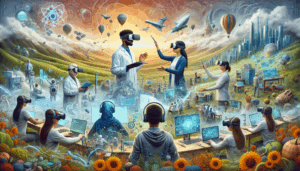
Introduction to VR in Education
Virtual Reality (VR) has come a long way from being a futuristic concept to a tangible tool transforming various industries, including education. The immersive nature of VR allows students to step into worlds and scenarios that would otherwise be inaccessible or costly to experience in real life. As we delve into the future of VR in education and online learning, it’s clear that this technology holds immense potential to revolutionize how we teach and learn.
Enhancing Engagement and Immersion
One of the most significant advantages of VR in education is its ability to enhance student engagement. Traditional learning often struggles to capture and maintain the attention of students, but VR offers an immersive experience that can make learning more enjoyable and memorable. Imagine a history class where students can walk through ancient Rome or a biology lesson where they can explore the human body from the inside. These experiences not only make learning more engaging but also help students retain information more effectively.
Accessibility and Inclusivity
VR has the potential to make education more accessible and inclusive. For students who are geographically isolated or have physical disabilities, VR can bring the classroom to them. It can also cater to different learning styles, allowing visual, auditory, and kinesthetic learners to benefit from tailored experiences. This inclusivity can help bridge educational gaps and provide equal opportunities for all students, regardless of their circumstances.
Collaborative Learning in Virtual Spaces
The future of VR in education also involves collaborative learning in virtual spaces. Students from different parts of the world can come together in a shared virtual environment to work on projects, conduct experiments, or engage in discussions. This not only fosters a sense of global community but also prepares students for a future where remote collaboration is increasingly common. Virtual classrooms can be designed to encourage interaction and teamwork, making learning a more dynamic and social experience.
Simulations and Practical Training
VR is particularly valuable for simulations and practical training. Fields like medicine, engineering, and aviation can benefit immensely from VR simulations that allow students to practice procedures and techniques in a safe and controlled environment. For instance, medical students can perform virtual surgeries, gaining valuable experience without the risks associated with real-life operations. This hands-on approach can accelerate learning and improve the quality of training, ultimately leading to better-prepared professionals.
Challenges and Considerations
While the future of VR in education looks promising, there are challenges and considerations that need to be addressed. The cost of VR equipment and the need for high-speed internet can be barriers to adoption, particularly in underfunded schools or regions with poor infrastructure. Additionally, there are concerns about the potential for VR to cause motion sickness or other health issues. Educators and policymakers must work together to find solutions to these challenges, ensuring that VR can be integrated into education in a sustainable and equitable way.
The Role of Teachers in a VR-Driven Future
As VR becomes more prevalent in education, the role of teachers will evolve. Rather than being the sole source of information, teachers will become facilitators and guides, helping students navigate and make the most of their virtual learning experiences. Professional development will be crucial to equip teachers with the skills and knowledge needed to effectively integrate VR into their teaching practices. This shift can lead to a more personalized and student-centered approach to education, where teachers can focus on nurturing critical thinking and creativity.
The Future Landscape of VR in Education
Looking ahead, the future of VR in education and online learning is likely to be shaped by ongoing technological advancements. As VR hardware becomes more affordable and user-friendly, and as content creation tools become more accessible, we can expect to see a proliferation of high-quality educational VR experiences. The integration of artificial intelligence and machine learning could further enhance the personalization and effectiveness of VR in education, tailoring learning experiences to individual students’ needs and progress.
In conclusion, the future of VR in education and online learning holds exciting possibilities. From enhancing engagement and accessibility to providing practical training and fostering collaboration, VR has the potential to transform the educational landscape. While challenges remain, the ongoing development of VR technology and the commitment of educators and policymakers to address these issues suggest a bright future for VR in education. As we continue to explore and harness the power of this technology, we move closer to a world where learning is more immersive, inclusive, and effective than ever before.