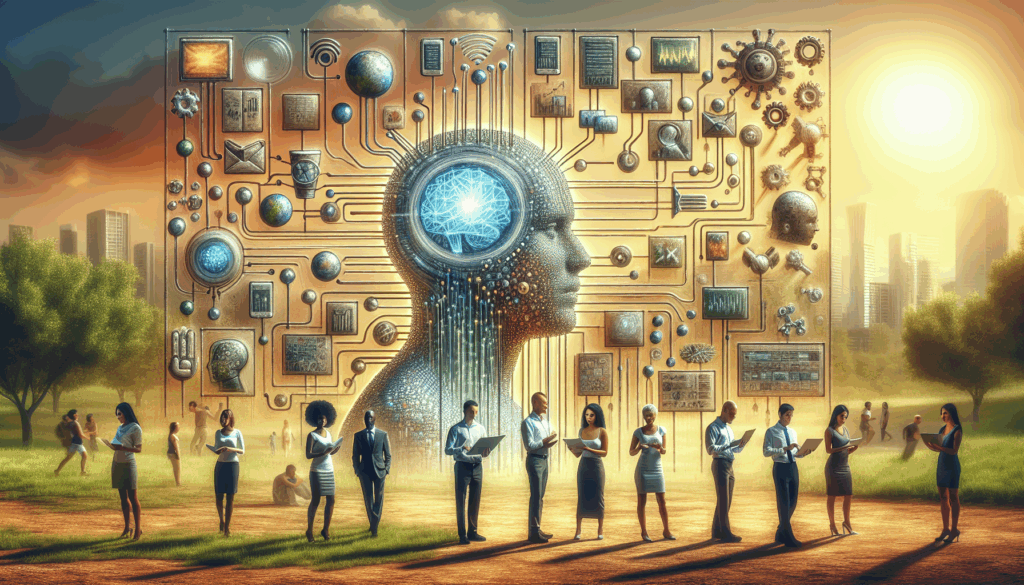
In recent years, the landscape of content creation has been transformed by the advent of generative artificial intelligence (AI). This technology, which can autonomously produce various forms of content ranging from text to images and even music, is reshaping the way creators, businesses, and consumers interact with digital media. Let’s dive into how generative AI is revolutionizing content creation and what it means for the future.
The Rise of Generative AI
Generative AI has come a long way from its early days. Initially, AI systems were limited to simple pattern recognition and basic data processing. However, advancements in machine learning, particularly in the realm of neural networks, have propelled generative AI into a new era. These systems can now create content that is not only coherent but also remarkably creative and diverse.
The rise of generative AI can be attributed to several key developments. First, the availability of vast amounts of data has allowed AI models to learn and generate content more effectively. Second, improvements in computing power have enabled the processing of these large datasets, making it feasible to train complex AI models. Lastly, the development of sophisticated algorithms has enhanced the capabilities of AI to produce high-quality, contextually relevant content.
Transforming Textual Content Creation
One of the most visible impacts of generative AI is in the realm of textual content creation. Tools like ChatGPT and other language models have become indispensable for writers, marketers, and businesses looking to produce high volumes of content efficiently. These AI systems can generate articles, blog posts, social media updates, and even poetry, often with minimal human intervention.
The benefits of using generative AI for text creation are manifold. For one, it significantly reduces the time and effort required to produce content. This is particularly beneficial for businesses that need to maintain a steady stream of content to engage their audience. Additionally, generative AI can help overcome writer’s block by providing a starting point or a fresh perspective on a topic.
However, it’s not just about speed and efficiency. Generative AI can also enhance the quality of content. By analyzing vast datasets, these systems can identify trends, preferences, and patterns that human writers might miss. This enables the creation of content that is more tailored to the audience’s needs and interests.
Revolutionizing Visual Content Creation
Beyond text, generative AI is making significant strides in the creation of visual content. From generating realistic images and videos to designing graphics and animations, AI-driven tools are opening up new possibilities for artists and designers. Platforms like DALL-E and Midjourney are at the forefront of this revolution, allowing users to create stunning visuals from simple text prompts.
The impact of generative AI on visual content creation is profound. It democratizes the creative process, making it accessible to individuals who may not have traditional artistic skills. Moreover, it allows for rapid prototyping and iteration, enabling creators to experiment with different styles and concepts quickly.
Generative AI also has practical applications in industries such as advertising and entertainment. For instance, AI-generated visuals can be used to create personalized advertisements that resonate more deeply with individual consumers. In the film and gaming industries, AI can assist in creating detailed environments and characters, reducing production costs and time.
Challenges and Ethical Considerations
While the potential of generative AI is exciting, it also comes with its share of challenges and ethical considerations. One of the primary concerns is the issue of originality and copyright. As AI systems generate content based on existing data, there is a risk that they may inadvertently reproduce copyrighted material. This raises questions about ownership and the rights of the original creators.
Another challenge is the potential for misuse. Generative AI can be used to create misleading or harmful content, such as deepfakes or fake news. This necessitates the development of robust detection and verification mechanisms to ensure that AI-generated content is used responsibly.
Ethically, there is also the question of transparency. Should content created by AI be clearly labeled as such? This is important for maintaining trust with audiences who may not be aware that the content they are consuming was generated by a machine.
The Future of Content Creation with Generative AI
Looking ahead, the future of content creation with generative AI appears bright. As the technology continues to evolve, we can expect even more sophisticated and versatile AI systems that can produce content across a wider range of formats and genres. This will likely lead to new forms of creative expression and innovative ways of engaging with audiences.
Moreover, the integration of generative AI with other emerging technologies, such as augmented reality and virtual reality, could open up entirely new dimensions of content creation. Imagine being able to step into a world where AI-generated content comes to life in immersive, interactive environments.
However, the future of generative AI in content creation will also depend on how we address the challenges and ethical considerations mentioned earlier. It will require a collaborative effort from technologists, policymakers, and content creators to ensure that the benefits of generative AI are realized while minimizing its potential risks.
In conclusion, generative AI is undeniably changing the landscape of content creation. It offers unprecedented opportunities for creativity, efficiency, and personalization. As we navigate this exciting new frontier, it’s crucial to remain mindful of the challenges and ethical considerations that come with it. By doing so, we can harness the full potential of generative AI to create content that is not only innovative but also responsible and impactful.